
Battery or alternator? How to tell the difference
Both can leave you with a car that won’t start. Replacing the wrong one costs money and doesn’t fix the problem, so it’s worth knowing the difference.
By Elie, mobile mechanic · Auto Service Alimotorsforall · Updated 2026-09-29
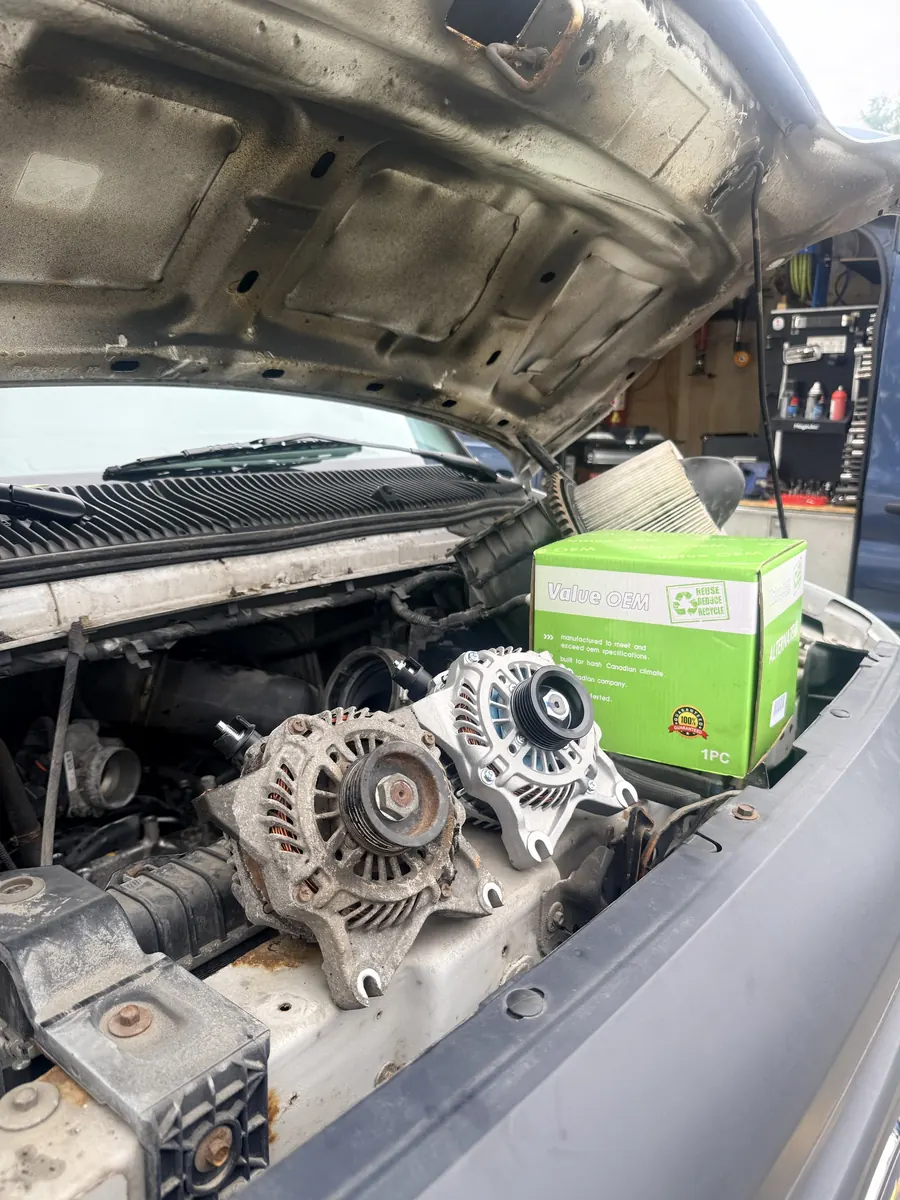
What each part does
The battery starts the car. The alternator, driven by the engine’s belt, runs the electrical system and recharges the battery while you drive. A bad alternator slowly drains a good battery; a bad battery can’t store what a good alternator gives it.
Signs that point to the battery
- Slow crank or clicking, especially on cold mornings.
- The car starts fine after a boost and keeps running normally.
- The battery is more than four or five years old.
- Corrosion on the terminals or a swollen battery case.
Signs that point to the alternator
- Battery warning light on while driving.
- Lights dim or flicker, especially at idle.
- The car starts after a boost but dies again after a while.
- A new battery goes flat within days.
- A whining noise or a burning smell from the belt area.
How I test both
I test the battery’s condition, then check the charging voltage with the engine running. That tells us which part is at fault before anything is replaced. On many vehicles, either one can then be replaced where the car is parked.