
Bad wheel bearing symptoms
A wheel bearing lets the wheel spin smoothly. When it wears out, it usually tells you with noise first. Here’s what to listen for and what to do.
By Elie, mobile mechanic · Auto Service Alimotorsforall · Updated 2026-09-29
The classic symptoms
- A hum or growl that rises with speed, like driving on a rough road.
- The noise changes when you steer left or right (the load shifts to one side).
- Grinding or clicking from one corner.
- Vibration in the steering wheel or the floor.
- ABS or traction-control light, since many hubs carry the wheel-speed sensor.
Why it matters
A worn bearing gets louder and hotter over time. It usually still drives for a while, but it shouldn’t be ignored: in the worst case, the wheel can develop play. Potholes and road salt, both common in Montreal, are hard on bearings.
How it’s diagnosed
A road test narrows down the side, then the wheel is lifted and checked for play and roughness. It’s easy to confuse bearing noise with tire noise, so tires are checked too.
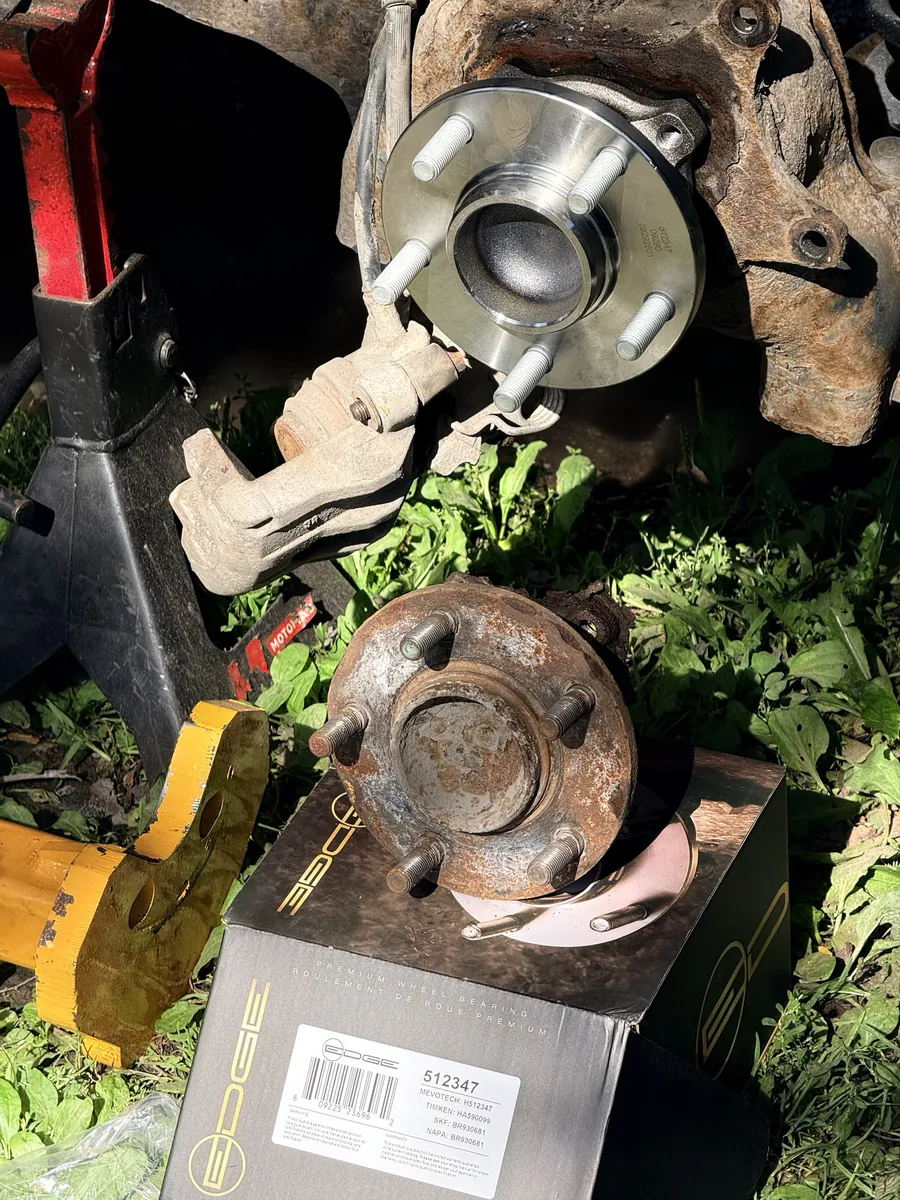
A real example: Nissan Rogue
The photo on this page is from one of my jobs: a worn, rusted rear hub bearing on a Nissan Rogue, replaced on jack stands in a parking lot. On bolt-in hub assemblies like this one, the repair can be done on site. Press-in bearings sometimes need a shop press.